
When the Cauldron Is Mishandled
I ChingThis flow follows the cauldron's movement from overturned vessel to a properly functioning instrument that nourishes worthy people.
increasing Bearing strength in each event
 decreasing
Bearing strength in each eventdecreasingThe Vessel Is Introduced
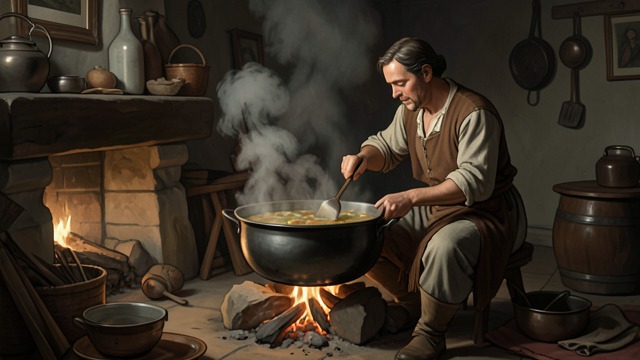
An Instrument of Nourishment
Food and government
The cauldron cooks food for the household and altar. Legge interprets it as an image of government nourishing people of talent and virtue.
Its political value comes from the work it performs.
A structure that can fail
The figure's lines are said to resemble feet, body, ears, and handle. Legge notes the interpretive ingenuity while admitting that the text is difficult.
The vessel's shape provides a framework for examining government line by line.
The Overturned Vessel Is Emptied
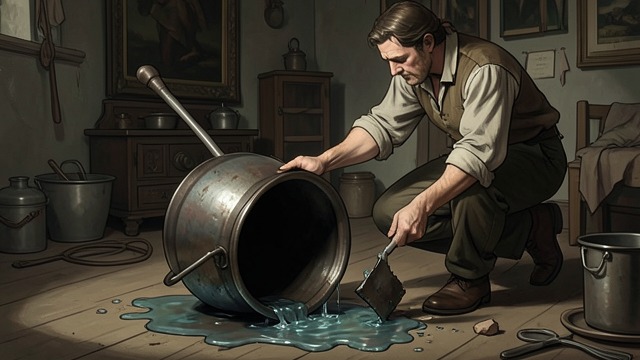
A Bad Beginning Can Be Corrected
Feet turned upward
The first line presents the cauldron overturned. Commentators explain that this allows bad material to be removed, though Legge admits dissatisfaction with the interpretation.
The image turns apparent failure into a possible cleaning.
A subordinate position changes
The line also gives the example of a concubine whose status is altered by bearing a son. Legge records the inherited social symbolism without presenting it as his own ideal.
The opening introduces improvement through a change in position.
Good Food Waits for a Proper Relation
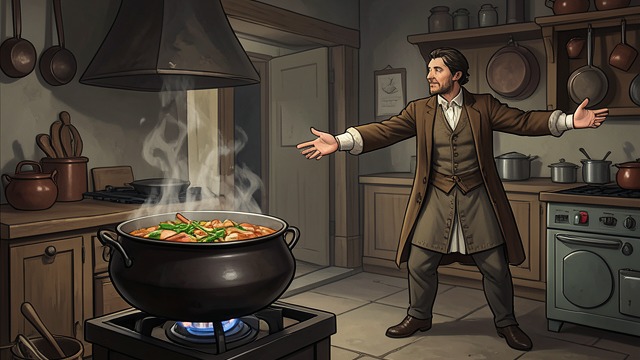
Resources Need the Right Connection
An enemy stays outside
The second line shows the cauldron filled with food while an enemy cannot approach. Legge sees a person able to resist a harmful solicitation.
The vessel's contents remain protected by firmness.
A changed handle delays progress
The third line depicts altered ears that prevent advancement. Yet the text promises eventual rain and good fortune when the right relation is restored.
The images make usefulness depend on access and connection, not merely on abundance.
A Minister Spills the Offering
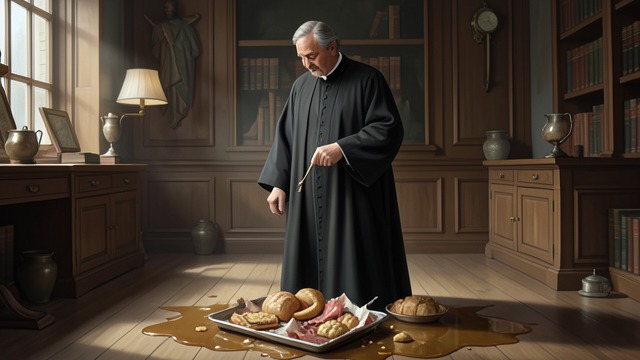
Responsibility Exceeds Capacity
The ruler's food is lost
The fourth line shows broken feet and the spilling of what was intended for the ruler. Legge reads the disaster as an overburdened minister unable to perform his work.
The failure brings shame as well as material loss.
Appointment requires judgment
A difficult task cannot be entrusted to someone who lacks sufficient support or capacity. The image warns against placing important resources in unreliable hands.
The crisis exposes the human limits behind a failed institution.
The Vessel Nourishes the Worthy
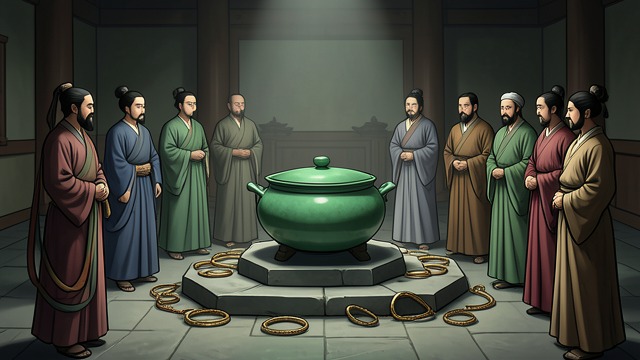
Government Finds Its Proper Use
A refined instrument
The final line gives the cauldron jade rings and a favorable outcome. Legge interprets its subject as a great minister helping the ruler nourish worthy people.
Strength is softened into a capacity for careful service.
The political purpose fulfilled
The vessel's final value lies in sustaining people whose abilities benefit the state. Nourishment is not passive giving; it is a structure that prepares talent to serve.
The sequence resolves when the instrument and the people it supports work together.
At the opening of The Cauldron
At the first line of The Cauldron
At the second and third lines of The Cauldron
At the fourth line of The Cauldron
At the final line of The Cauldron
